Five ai search competitive analysis tools — Semrush AI Visibility Toolkit, Ahrefs Brand Radar, Profound, Peec AI and Otterly.AI — show how often rivals get named, quoted and cited inside AI Overviews and chatbot answers.
How we picked these tools
An AI answer either names your competitor or it doesn’t, and no rank tracker tells you which. That gap is why a separate category of monitoring tools exists. The five below were chosen because each one tracks brand and competitor mentions inside generated answers rather than inside blue links.
The axes used to compare them:
- Surfaces covered — Google AI Overviews, ChatGPT, Perplexity, Gemini, Copilot
- Competitor share of voice — can you see rival brands beside yours in the same prompt set?
- Prompt volume — how many tracked questions the entry plan allows
- Citation detail — which URLs the answer pulled from, not just the mention count
- Price transparency — a public page with a number on it
- Reporting — exports, scheduled reports, API access for agencies
Prices were checked against public vendor pages and published October 2026 price checks, and every price below carries its check date. Nothing here was tested hands-on, no vendor supplied access, and there are no affiliate links in this article.
What could not be verified: public entry pricing for Profound, Peec AI and Otterly.AI was not confirmed in the sources available, so no numbers are quoted for them. The sampling accuracy of each tool — how closely its prompt runs match what a real user sees — has not been independently audited by anyone we could cite.
The urgency is measurable. A Pew Research Center study of US adults’ browsing found that users who saw a Google AI summary clicked a traditional search result link in only 8 percent of all visits, as reported by The Register. If you also own organic search for a small team, pair this with the practical picks in our rundown of AI SEO tools for small business owners.
AI search competitive analysis tools compared at a glance
Pew’s March 2025 sample covered 68,879 Google searches, and 18% of all searches in it produced an AI summary, according to PPC Land. That share is the size of the surface these tools measure.
| Service | Key AI feature | Free plan | Lowest paid price (check date) | Best for |
|---|---|---|---|---|
| Semrush AI Visibility Toolkit | Tracked prompts plus a Brand Performance domain across AI assistants | Not verified | $99/month per domain (as of October 2026) | SEO teams who want AI mentions beside existing rank data |
| Ahrefs Brand Radar | Brand and competitor mentions in AI answers, tied to Ahrefs’ link index | Not verified | From $199/month on the main pricing page (as of October 2026) | Teams already paying for an Ahrefs core plan |
| Profound | Answer-engine analytics positioned at enterprise brand teams | Not verified | Not published in our sources — request a quote | Large brands with a dedicated AI search owner |
| Peec AI | Brand-versus-competitor visibility dashboards aimed at agencies | Not verified | Not published in our sources — request a quote | Agencies reporting on several client brands |
| Otterly.AI | Prompt monitoring with link-level citation tracking | Not verified | Not published in our sources — request a quote | Solo marketers starting with one brand |
Read the price column as a unit cost, not a plan name. Semrush’s entry tier covers one domain, so a three-brand portfolio is three times the number. Ahrefs’ Brand Radar sits alongside a core subscription, which changes the real monthly floor for anyone not already a customer.
1. Semrush AI Visibility Toolkit
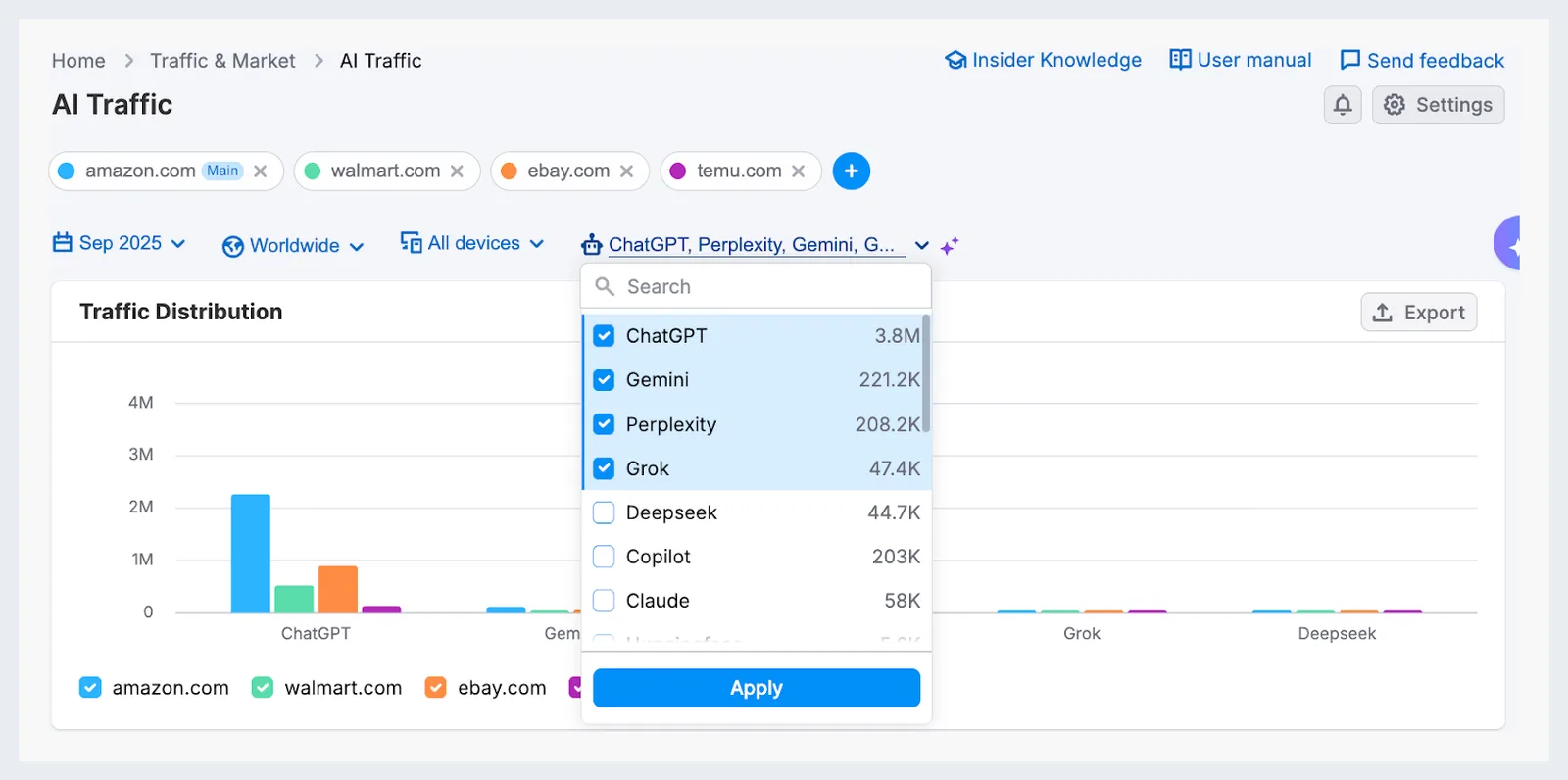
The closest thing to a default choice, because it bolts AI answer tracking onto a suite your SEO lead already opens every morning. You pick prompts, Semrush runs them against AI assistants, and you see which brands get named.
What it does well: prompt-level tracking with competitor names in the same view, so you can show a founder exactly which questions surface a rival instead of you. Reporting lines up with the keyword and position data sitting next to it.
Price: Semrush prices its AI Visibility Toolkit at $99 per month per domain, according to Semrush, as of October 2026. Dageno’s September 2026 check of Semrush’s official guide found that the $99 entry plan includes 25 tracked prompts and one Brand Performance domain — just under $4 per tracked prompt per month.
Drawbacks: 25 prompts goes fast if your category has long-tail buying questions, and per-domain pricing punishes multi-brand portfolios. Skip it if you need to track five client domains on a fixed retainer; the per-domain charge stacks badly.
Best for: in-house SEO teams who want AI visibility reported in the same place as rankings.
2. Ahrefs Brand Radar
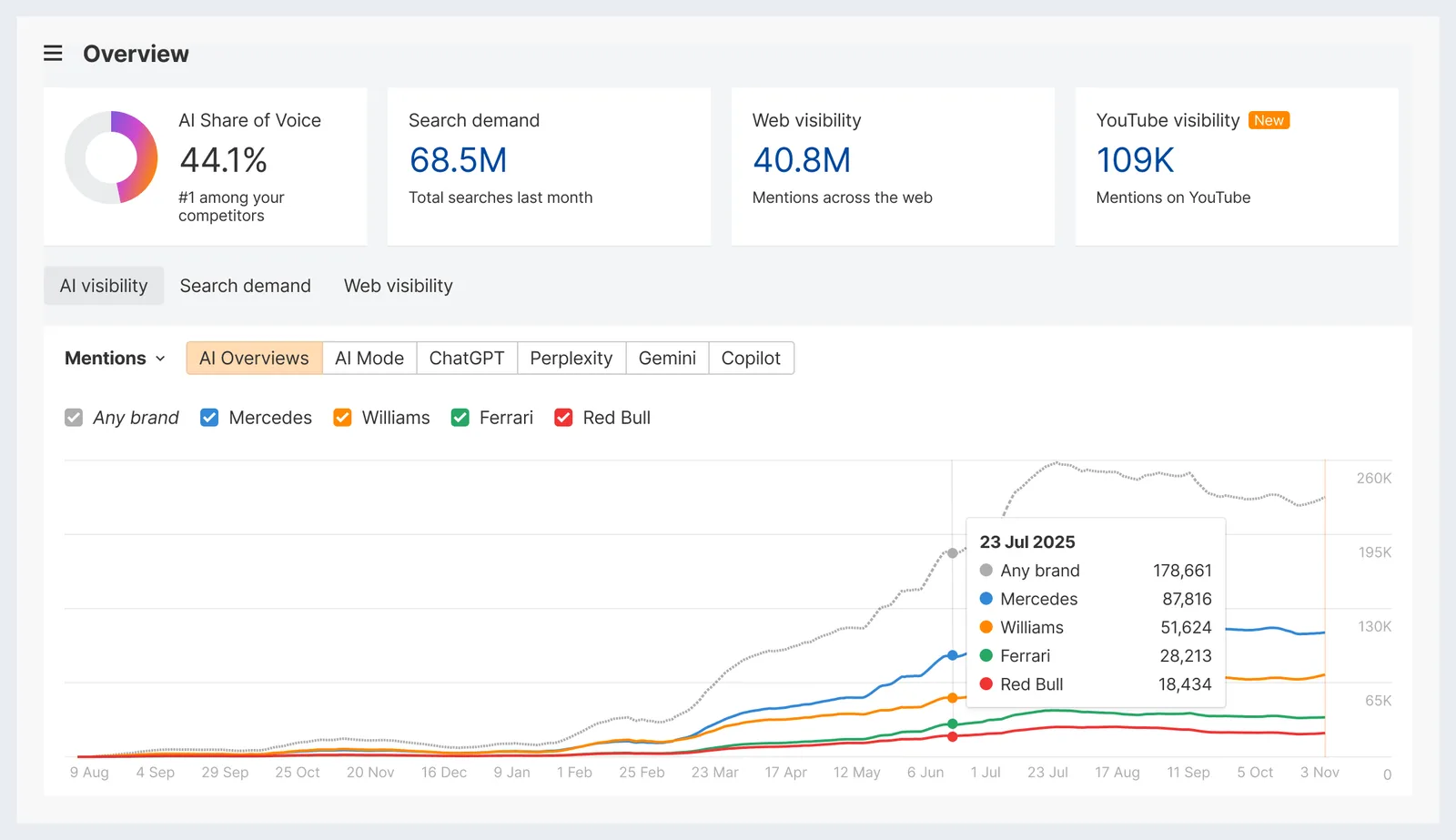
Brand Radar is Ahrefs’ answer to the same problem, built on the crawl and citation data the company already holds. The pitch is seeing which pages AI answers quote when your category comes up, yours or a competitor’s.
What it does well: ties mentions back to source URLs, which matters because the page being cited is the thing you can actually change. Competitor comparison sits inside a toolset most agencies already know.
Price: Ahrefs publishes two different entry prices for Brand Radar — $398/month and $699/month on the product page, but from $199/month on the main pricing page — so sources differ and both should be checked before buying, according to Ryze’s October 2026 analysis. For context on the core subscription Brand Radar sits beside, a Tools8020 price check dated 22 October 2026 listed Ahrefs plans at $129 (Lite), $249 (Standard), $449 (Advanced) and $1,499 (Enterprise) per month.
Drawbacks: conflicting public prices make budgeting awkward, and the entry number you see depends on which page you landed on. Skip it if you need a signed-off monthly figure before a procurement meeting next week.
Best for: teams already on an Ahrefs plan who want citation-level detail.
3. Profound
Profound is built for brand teams treating AI answers as a channel with an owner, a budget and a weekly review. Positioning is enterprise: large prompt sets, multiple markets, and analytics meant for a marketing leadership deck rather than a practitioner’s tab.
What it does well: depth of prompt coverage and the kind of agent-level reporting a VP asks for when the CEO forwards a ChatGPT answer that names a competitor. Check the official site for the current surface list, since coverage changes month to month in this category.
Price: not published in the sources checked for this article as of October 2026 — treat it as a sales conversation and ask for the per-seat and per-prompt breakdown in writing.
Drawbacks: no public number means no quick comparison, and enterprise onboarding adds weeks before the first report. Skip it if you are one marketer who needs an answer this quarter without a procurement cycle.
Best for: brands with a named owner for AI search and a budget line to match.
4. Peec AI
Peec AI targets agencies that report on several brands and need a dashboard a client can read without a walkthrough. The core view is your brand against named competitors across a prompt set you define.
What it does well: side-by-side brand comparison framed as share of answers, which translates cleanly into a monthly client report. Agency workflows — multiple workspaces, repeatable prompt sets — are the design centre rather than an afterthought.
Price: not published in the sources checked for this article as of October 2026. Ask specifically whether pricing is per workspace or per tracked brand, because that single detail decides whether a ten-client roster is affordable.
Drawbacks: a younger product than the big suites, so historical data depth and integrations may be thinner than an SEO platform you already run. Skip it if you need AI mentions joined to backlink and keyword data in one tool.
Best for: small agencies adding AI visibility to an existing reporting rhythm. If you are assembling a lean stack, our guide to the AI tools a six-person startup team can actually run covers the budgeting logic.
5. Otterly.AI
Otterly.AI is the lightest entry point here, aimed at one marketer monitoring one brand without a platform migration. You load prompts, it reports mentions and the links cited alongside them.
What it does well: link-level citation tracking in a simple interface, so you can see which of your pages — or a competitor’s comparison page — is doing the work inside an answer. Setup is a prompt list, not an implementation project.
Price: not published in the sources checked for this article as of October 2026. Compare any quote on a per-prompt-per-month basis so it lines up with the Semrush figure above.
Drawbacks: fewer enterprise controls, and a small tool means another login outside your main analytics stack. Skip it if your reporting has to roll up into one platform for a board pack.
Best for: founders and solo marketers testing whether AI visibility is a real problem for their category before committing budget. Keeping those prompt lists and findings somewhere searchable helps; our notes on organizing team knowledge with AI tools cover the filing side.
Which one fits you
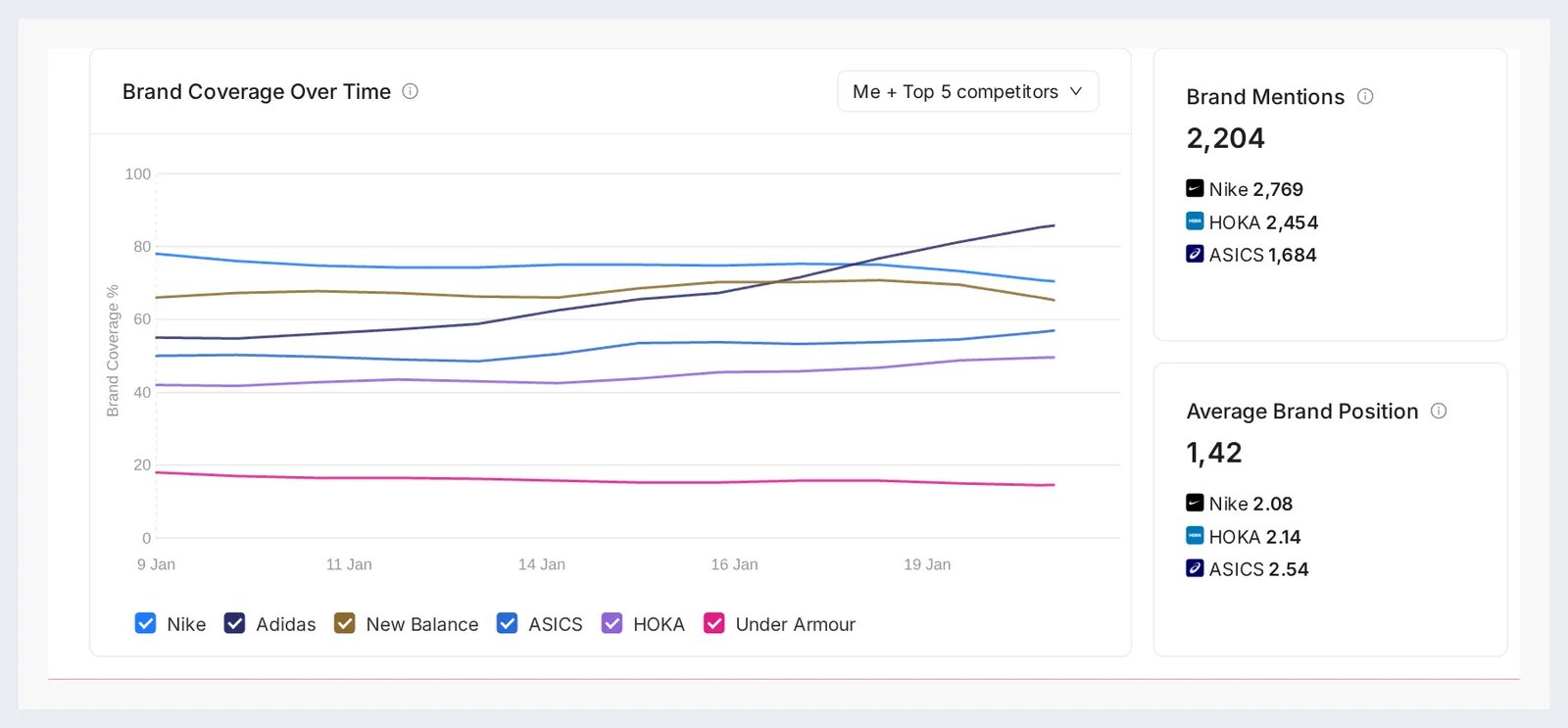
Most AI Overviews — 88 percent — link to at least three sources, so a single answer can show several competing brands at once, according to The Decoder. Your goal is being one of those three, which means you need the competitor column, not just your own mention count.
| If this is you | Pick this |
|---|---|
| In-house SEO team, one or two domains | Semrush AI Visibility Toolkit at $99/month per domain (as of October 2026) |
| Already paying for an Ahrefs core plan | Ahrefs Brand Radar — confirm which entry price applies first |
| Enterprise brand with a dedicated owner | Profound |
| Agency reporting on multiple clients | Peec AI |
| Solo marketer validating the problem | Otterly.AI |
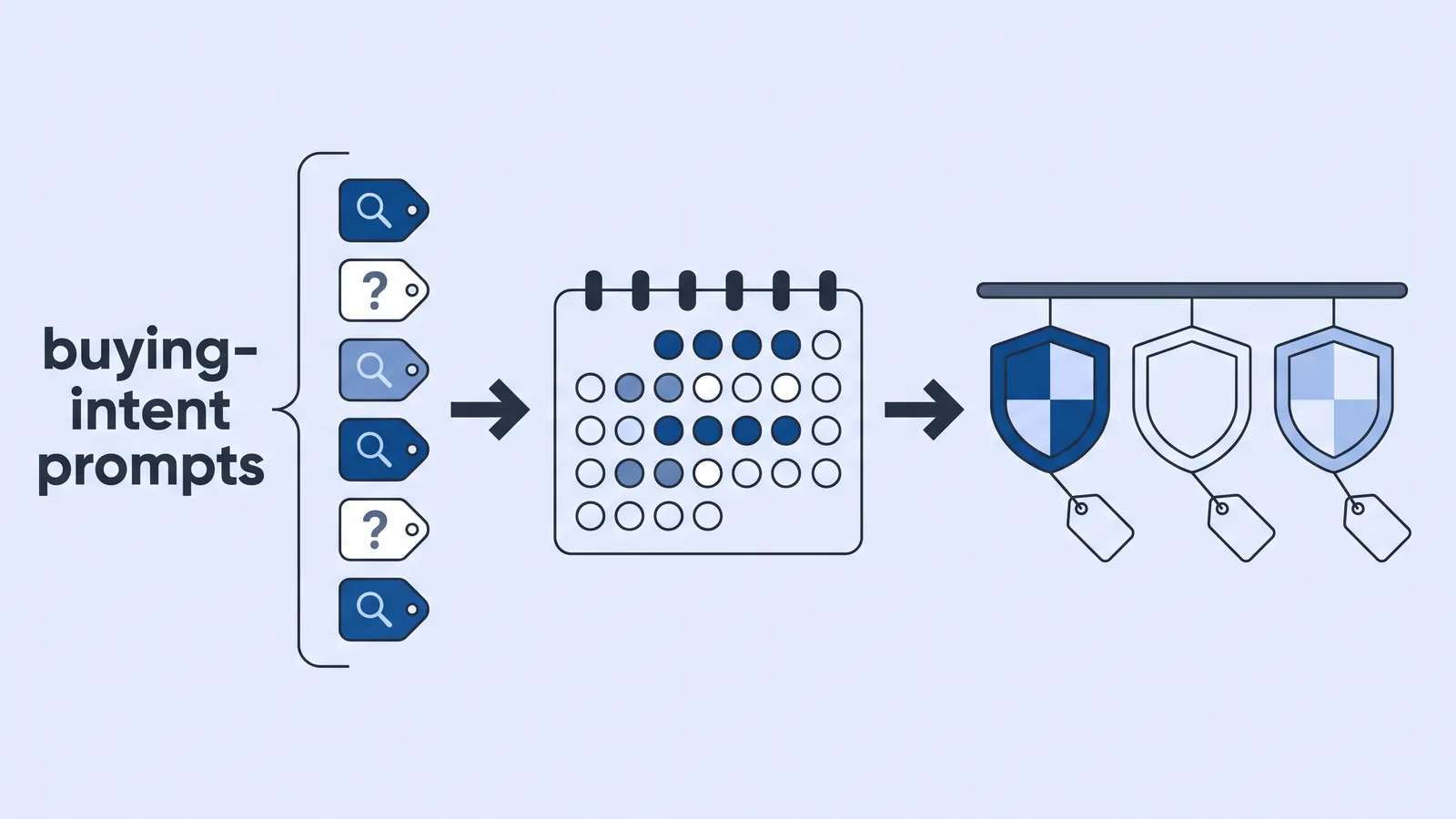
Start with 20 to 30 buying-intent prompts your sales team actually hears, not head terms. Run them for a full month before you judge a tool, because answer generation varies week to week. Write down which competitor appears most often; that name is your real benchmark.
One budgeting rule: price every quote per tracked prompt per month, then multiply by the number of brands you need. Dashboards look similar across all five. Prompt limits and per-domain charges are where the real cost difference lives.
Frequently asked questions
Do these tools show competitors inside Google AI Overviews?
Yes — that is the core use case, and it matters because most AI Overviews, 88 percent, link to at least three sources, so one answer can name several competing brands at once, according to The Decoder.
Why track AI mentions when I already track rankings?
Because clicks no longer follow visibility. In Pew’s data, only 1% of users clicked a link inside the AI summary itself, which is why brands now need tools that measure citation share rather than clicks, as Search Engine Journal reports.
What should I budget for AI search competitive analysis tools?
Semrush prices its AI Visibility Toolkit at $99 per month per domain as of October 2026, per Semrush, while Ahrefs lists Brand Radar from $199/month on its main pricing page and $398/month on the product page, according to Ryze’s October 2026 check.
How many prompts do I need to track to get a useful read?
Dageno’s September 2026 check of Semrush’s official guide found the $99 entry plan includes 25 tracked prompts and one Brand Performance domain, which is enough for a narrow category but tight if your buyers ask many long-tail comparison questions.
Can I just check AI answers manually instead?
You can spot-check, but manual runs miss variation across sessions and models. PPC Land reports that Pew’s March 2025 sample covered 68,879 Google searches, with 18% producing an AI summary — a scale no spreadsheet of manual checks will match.
Sources
- Google AI Overviews are killing the web, Pew study shows (again) — The Register
- Pew Research Confirms Google AI Overviews Is Eroding Web Ecosystem — Search Engine Journal
- AI search summaries reduce link clicks for Google users — PPC Land
- Pew finds that only 1 percent of users click a source link directly from Google’s AI Overviews — The Decoder
- 7 best AI visibility tracking tools for agencies by need — Semrush
- Semrush AI Visibility Toolkit Review 2026: Pros & Cons — Dageno
- Ahrefs Brand Radar Pricing in 2026: Why You’ll See Two Different Prices — Ryze
- Ahrefs Pricing (2026): Lite $129, Standard $249, Advanced $449/mo — Tools8020
This article was drafted with AI assistance and published by the AI Tools Editorial Team after its facts were checked against the sources listed above.