Google Search Console plus one paid tool is enough: Ahrefs Starter for research on a budget, Semrush for multi-site tracking, Surfer for content, BrightLocal for local reviews and listings.
How we compared
Most small-business software budgets die on tools nobody opens twice. Every product below is judged on what one non-specialist can run alone, in an afternoon, without an agency onboarding call.
The axes used across all five:
- Time to a usable output — how long before the tool tells you something you can act on today.
- What the entry tier actually buys — sites monitored, keywords tracked, seats included.
- Where the AI sits — keyword clustering, content briefs, AI-search visibility, or review handling.
- Local versus national intent — a plumber and a SaaS blog need different data.
- Data you keep — can you export it when you cancel.
A free Semrush account limits site analysis to 10 keywords, according to Semrush, which is enough to sanity-check a homepage and little else.
What we checked, and what we didn’t
Checked: official vendor pricing pages, vendor knowledge-base documentation, vendor-published consumer research, and one independent review of Ahrefs from TechRadar. Nothing here was tested hands-on, and the byline is an editorial team, not a user panel.
Not checked: current pricing for Surfer SEO, Google Search Console and BrightLocal, rank-tracking accuracy against live SERPs, and the quality of any AI-generated brief. Confirm feature details on the vendor’s own page before you pay, because tiers shift quietly.
| Tool | Verified entry price | Unit you’re really buying | Who it’s for | Skip it if |
|---|---|---|---|---|
| Semrush | Pro at $139.95/mo (Semrush) | Tracked keywords and monitored sites | Owners running several sites or brands | You only have one small site |
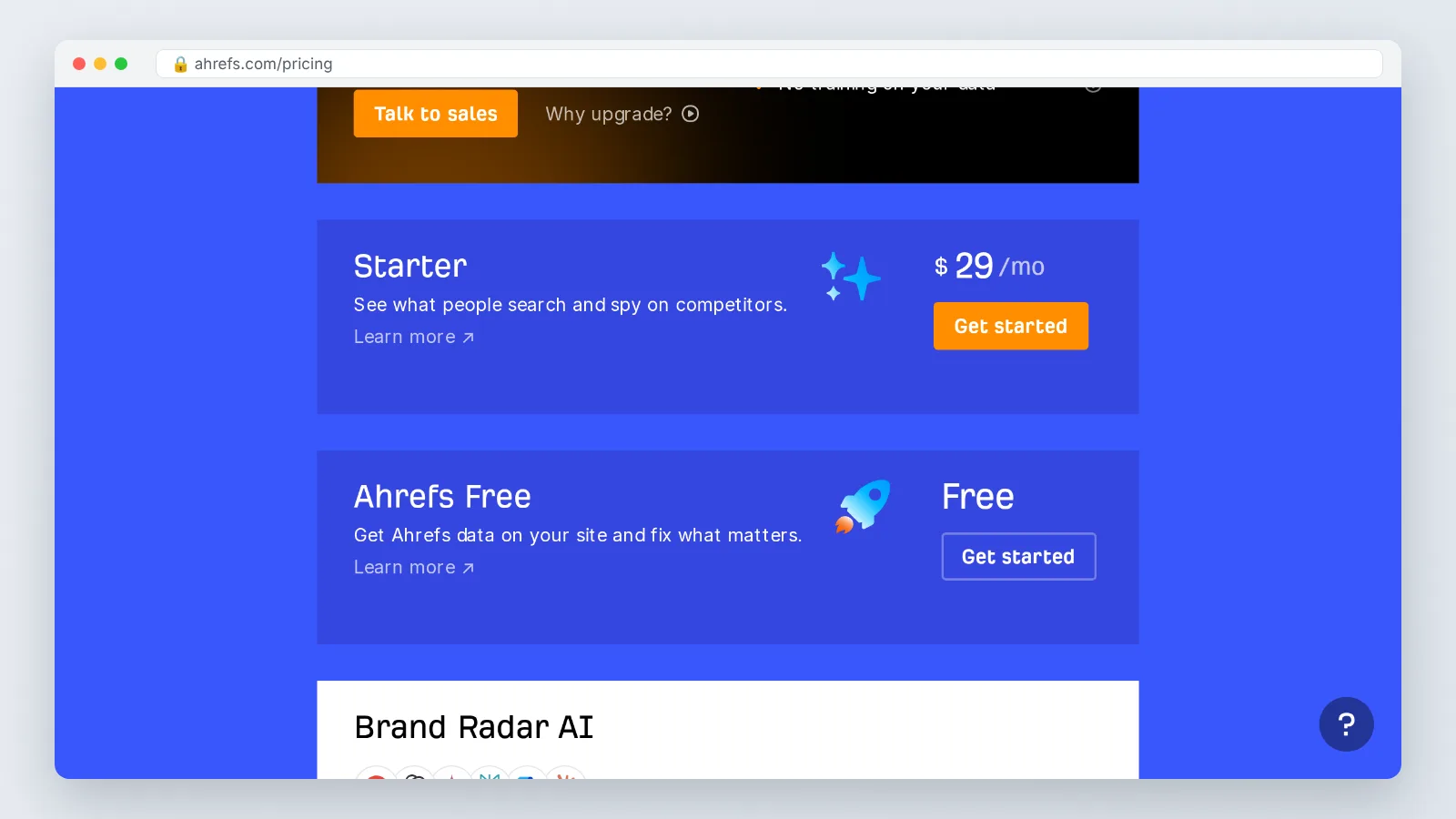
| Ahrefs | Starter at $29/mo (Ahrefs) | One seat’s access to core research tools | Solo founders doing their own research | Your team needs several logins |
| Surfer SEO | Not verified here | Cost per optimized article | Anyone publishing content weekly | You publish once a quarter |
| Google Search Console | Not verified here | Your own site’s query data | Every site, before anything paid | You need competitor data |
| BrightLocal | Not verified here | Locations and review monitoring | Multi-location and service-area firms | You sell nationally online |
1. Semrush
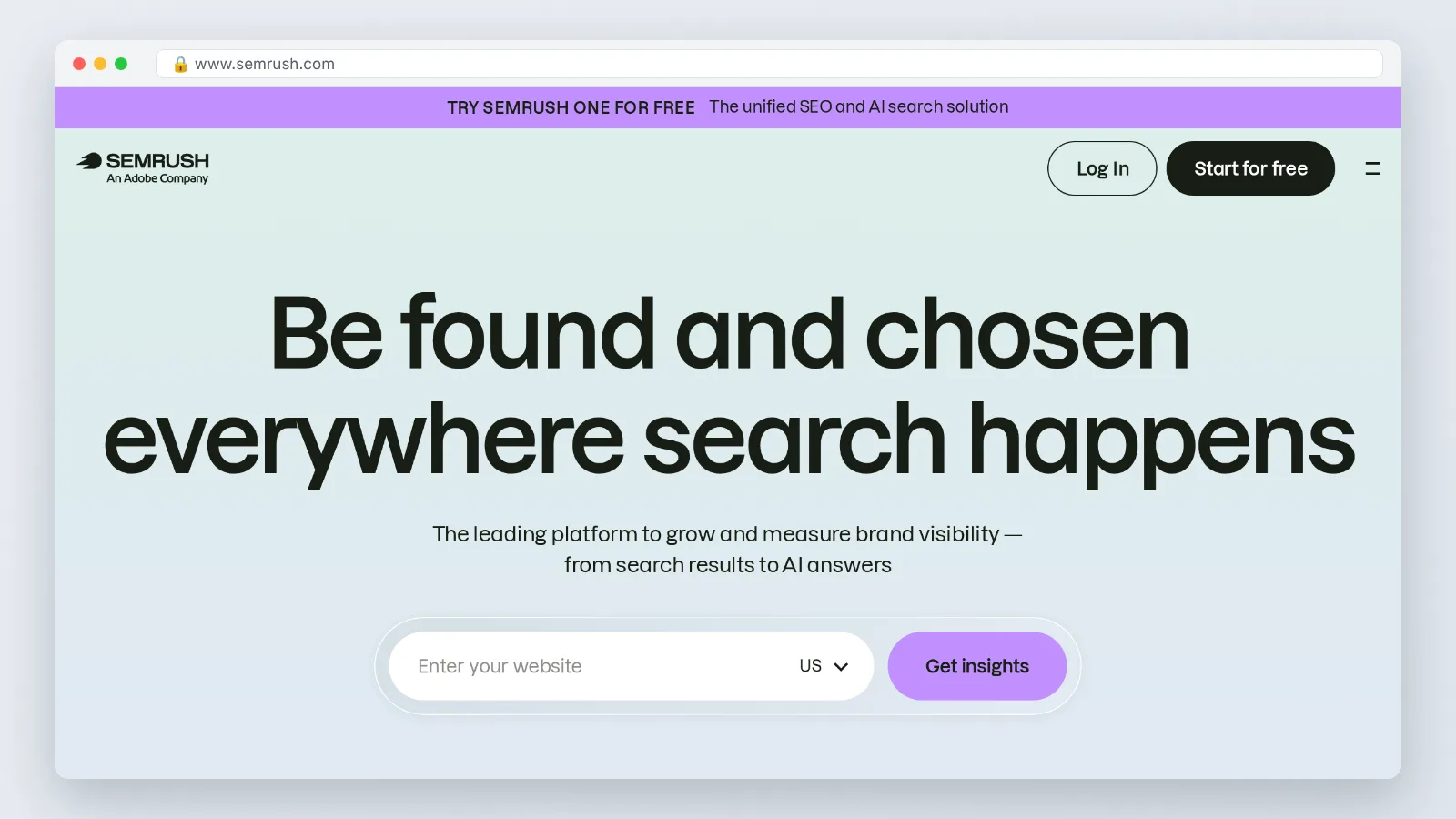
Semrush is the tool you buy when one site stops being the whole job. According to Semrush’s knowledge base, the Semrush SEO plan it positions for freelancers and small businesses covers 5 websites to monitor and 500 keywords tracked daily.
Price per tracked keyword tells a different story than price per month. Semrush reports Pro at $139.95 per month for 500 keywords and Guru at $249.95 per month for 1,500 keywords, so the more expensive plan is the cheaper one per keyword tracked. If you are near the Pro ceiling, the upgrade math flips in your favor.
The AI-search angle matters now that buyers ask chatbots for vendor shortlists. Semrush’s SEO + AI Search plan page specifies an allowance of 1 domain for AI brand performance tracking and 300 AI visibility reports per day.
Who it’s for: an owner or marketing lead juggling a main site plus a landing-page domain or a second brand.
Don’t pick it if you have one five-page site and no content calendar. You will pay for keyword slots you never fill, and a cheaper research tool plus Search Console will answer the same questions.
2. Ahrefs
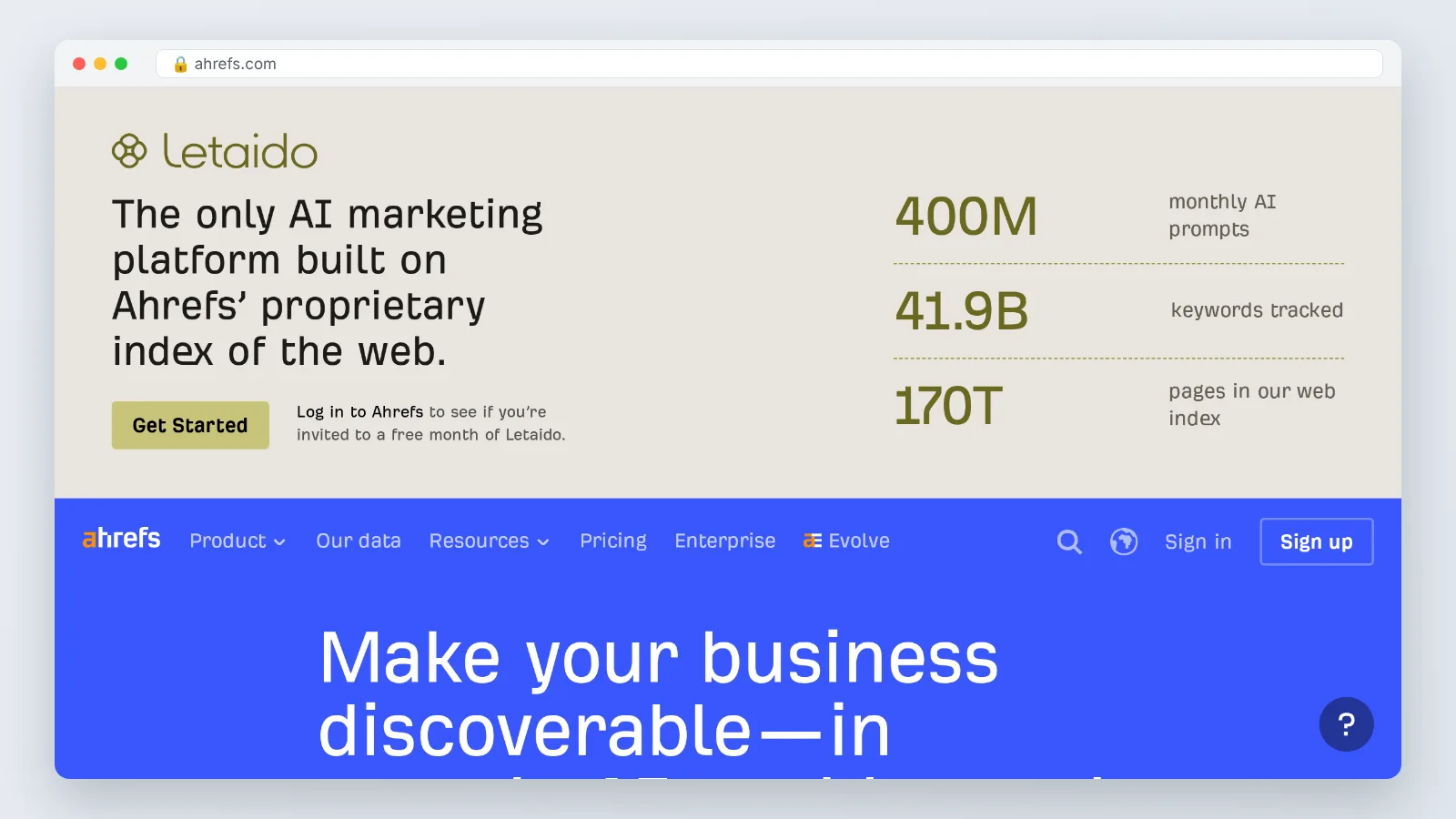
Ahrefs is the lowest-risk way to start doing keyword research yourself. Ahrefs’ official pricing page lists its entry-level Starter plan at $29 per month.
TechRadar notes that the $29 Starter tier is the newest in the Ahrefs lineup and gives entry-level access to Site Explorer, Keywords Explorer and Site Audit. Those three cover the questions a beginner actually has: what are competitors ranking for, what should I write next, and what is broken on my site.
Think of that $29 as a seat price rather than a company price. One person logs in, exports a keyword list, and shares it as a spreadsheet; the moment two colleagues want their own dashboards, your real cost changes and you should re-run the comparison.
Who it’s for: a solo founder or one-person marketing team learning research without committing to an agency retainer.
Don’t pick it if your growth depends on Google Business Profile posts, citations and review volume. A backlink index will not fix a service-area business that ranks poorly in the map pack.
3. Surfer SEO
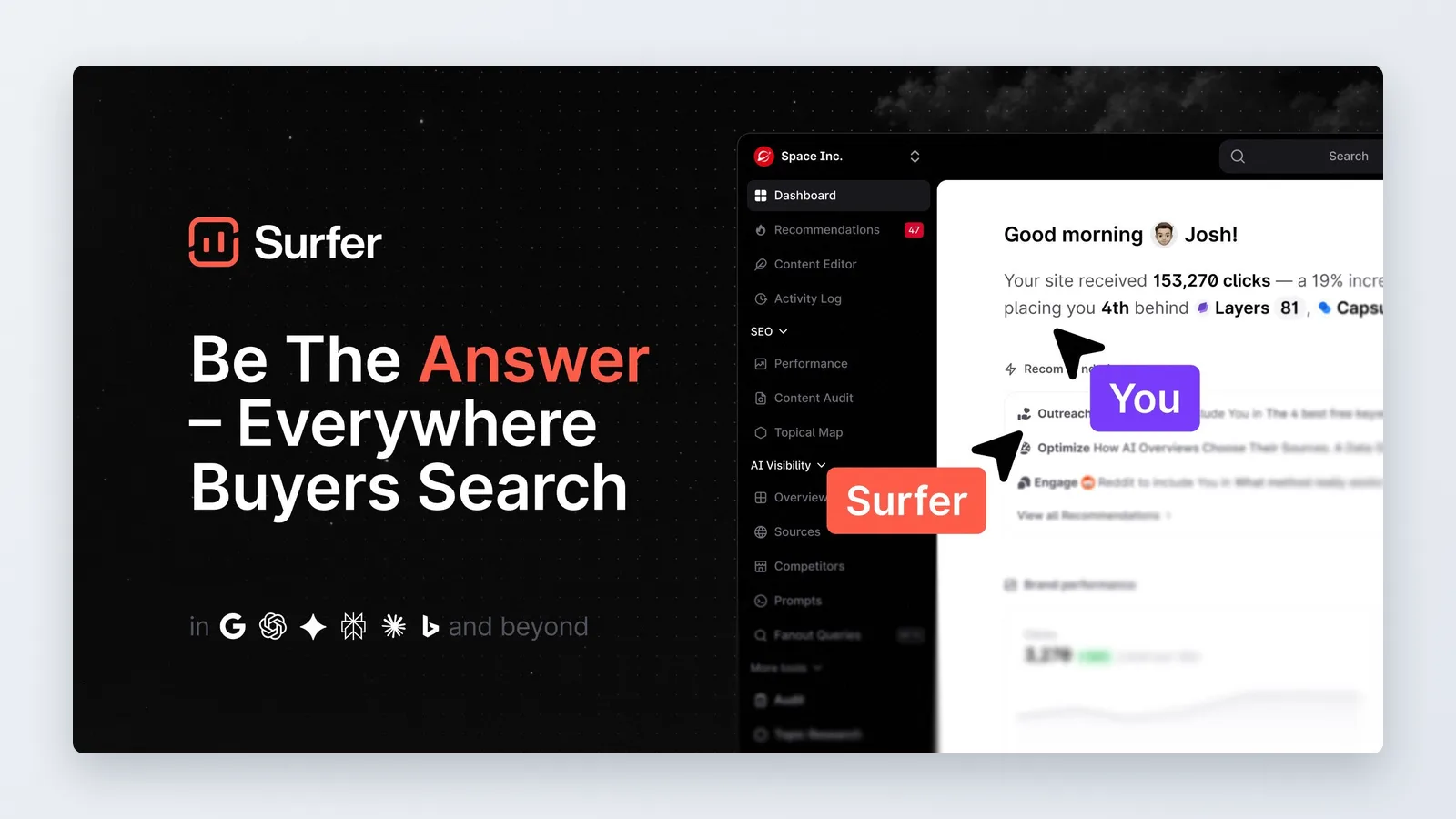
Surfer answers one narrow question well: is this draft structured like the pages already ranking for your term? You paste a draft, pick a target keyword, and work through the suggestions on headings, coverage and depth.
The practical workflow for a small team looks like this. Write the draft yourself or with a general AI assistant, run it through the content editor, fix the three or four structural gaps it flags, then publish and leave it alone for a few weeks.
Treat the optimization score as a checklist, not a target. Chasing a perfect score usually produces padded prose that a reader abandons in the first screen, and no score has ever been a ranking factor.
Who it’s for: a team publishing on a real cadence — think weekly posts — where editorial consistency matters more than raw research depth.
Don’t pick it if your publishing is sporadic. Divide the subscription by the articles you honestly ship each month; at one post a quarter, the cost per optimized article is indefensible and a good outline template does the same work.
4. Google Search Console
Start here before you spend anything. Search Console is the only tool on this list reporting on queries your own site actually appeared for, rather than a third-party estimate of them.
Three jobs it does that paid tools cannot replace: confirming which pages Google has indexed, showing the queries where you rank just off page one, and flagging technical errors on pages you forgot existed. Those near-miss queries are the cheapest content wins a small business has, because the page already exists.
Its blind spot is everything outside your own property. You get no competitor data, no estimate for keywords you have never ranked for, and no view of search surfaces Google does not own — a real gap, since BrightLocal recorded a 12% drop in consumers relying solely on Google for reviews, with TikTok, Apple Maps and ChatGPT growing as discovery platforms.
Who it’s for: every site owner, on day one, with no budget conversation required.
Don’t pick it as your only tool if you need to plan content for topics you do not yet rank for. Pair it with Ahrefs or Semrush.
5. BrightLocal
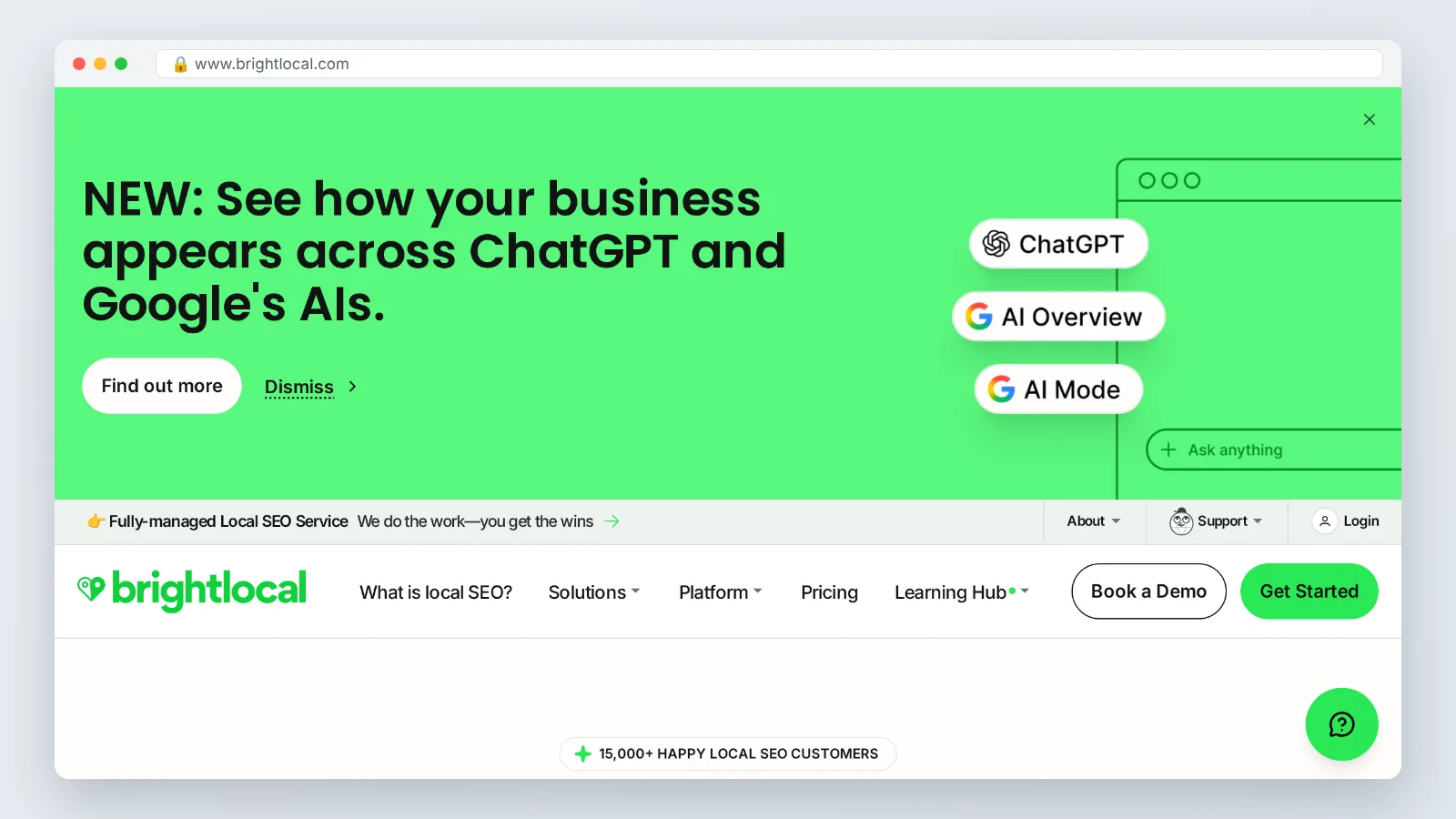
BrightLocal is built for businesses whose customers search with a map open. Reviews and listing accuracy carry weight there that no blog post can replace.
The revenue case is in BrightLocal’s own research. In BrightLocal’s Local Consumer Review Survey, 80% of consumers say they are likely to use a business that responds to all its reviews, while 42% are unlikely to use one that never replies. That makes a weekly review-reply routine a growth task, not an admin chore.
One alternative worth pricing against it: Semrush sells its local SEO tooling as a separate add-on available in 2 main plans, Local Base and Local Pro, per Semrush’s knowledge base. If you already pay for Semrush, compare the add-on against a standalone subscription before you add a second vendor.
Who it’s for: clinics, trades, restaurants and anyone managing more than one location or service area.
Don’t pick it if you have no physical presence and sell to a national audience. Listing management solves a problem you do not have, and the money belongs in content or links instead.
Which one fits you
Buy in this order: Search Console first, then one research tool, then a specialist tool for your actual bottleneck. Running three overlapping subscriptions at once is how small teams end up logging into none of them.
| Your situation | Start with | Why |
|---|---|---|
| No tools at all, any budget | Google Search Console | Your own query and indexing data, before estimates |
| Solo founder, tight budget | Ahrefs Starter | Ahrefs lists it at $29 per month |
| Two or more sites to track | Semrush | Semrush’s SEO plan covers 5 websites and 500 keywords daily |
| Publishing weekly | Surfer SEO | Keeps structure consistent across writers |
| Reviews drive bookings | BrightLocal | Review response correlates with consumer willingness to buy |
| Chasing visibility in AI answers | Semrush SEO + AI Search | 1 domain tracked, 300 AI visibility reports per day |
Do not over-rotate toward AI search yet. BrightLocal research found that 40% of consumers actively use generative AI when searching online, but only 3% treated an AI platform as their default for local searches.
Set one recurring hour each week for whichever tool you pick. The tool that gets opened beats the tool with better features, every time.
Frequently asked questions
What is the cheapest AI SEO tool worth paying for as a small business?
Ahrefs’ official pricing page lists its entry-level Starter plan at $29 per month, and TechRadar notes that tier gives entry-level access to Site Explorer, Keywords Explorer and Site Audit — enough for one person to run competitor research, pick topics and audit a small site.
Do I need Semrush if I already use Google Search Console?
Only once you need data about pages you have not published. Search Console reports queries your site already appears for; Semrush’s knowledge base positions its SEO plan at 5 websites and 500 keywords tracked daily, which covers competitor and planning work Search Console cannot do.
Can AI SEO tools replace hiring an SEO specialist?
For a single local site or a modest blog, usually yes: the tools surface the keyword list, the technical errors and the content gaps. A specialist earns their fee on migrations, penalties, multi-market expansion and link strategy, where a wrong call is expensive to reverse.
Should a small business optimize for ChatGPT and other AI answers now?
Treat it as a second priority. BrightLocal research found that 40% of consumers actively use generative AI when searching online, but only 3% treated an AI platform as their default for local searches, so classic search and map results still deserve most of your effort.
How much does review management affect local search results?
Reviews shape both ranking signals and conversion. In BrightLocal’s Local Consumer Review Survey, 80% of consumers say they are likely to use a business that responds to all its reviews, while 42% are unlikely to use one that never replies — a weekly reply routine pays for itself.
Sources
- Plans & Pricing – Ahrefs
- Ahrefs SEO platform review — TechRadar
- Subscriptions and Toolkits — Semrush Knowledge Base
- 16 Best SERP Tracking Tools for 2026 (Free & Paid) — Semrush
- The 31 Best Marketing Apps for 2025 — Semrush
- SEO & AI Search Plans and Pricing — Semrush
- Local Toolkit Pricing and Plans — Semrush Knowledge Base
- Half of consumers are asking AI for business recommendations — BrightLocal
- Local Consumer Review Survey — BrightLocal
This article was drafted with AI assistance and published by the AI Tools Editorial Team after its facts were checked against the sources listed above.