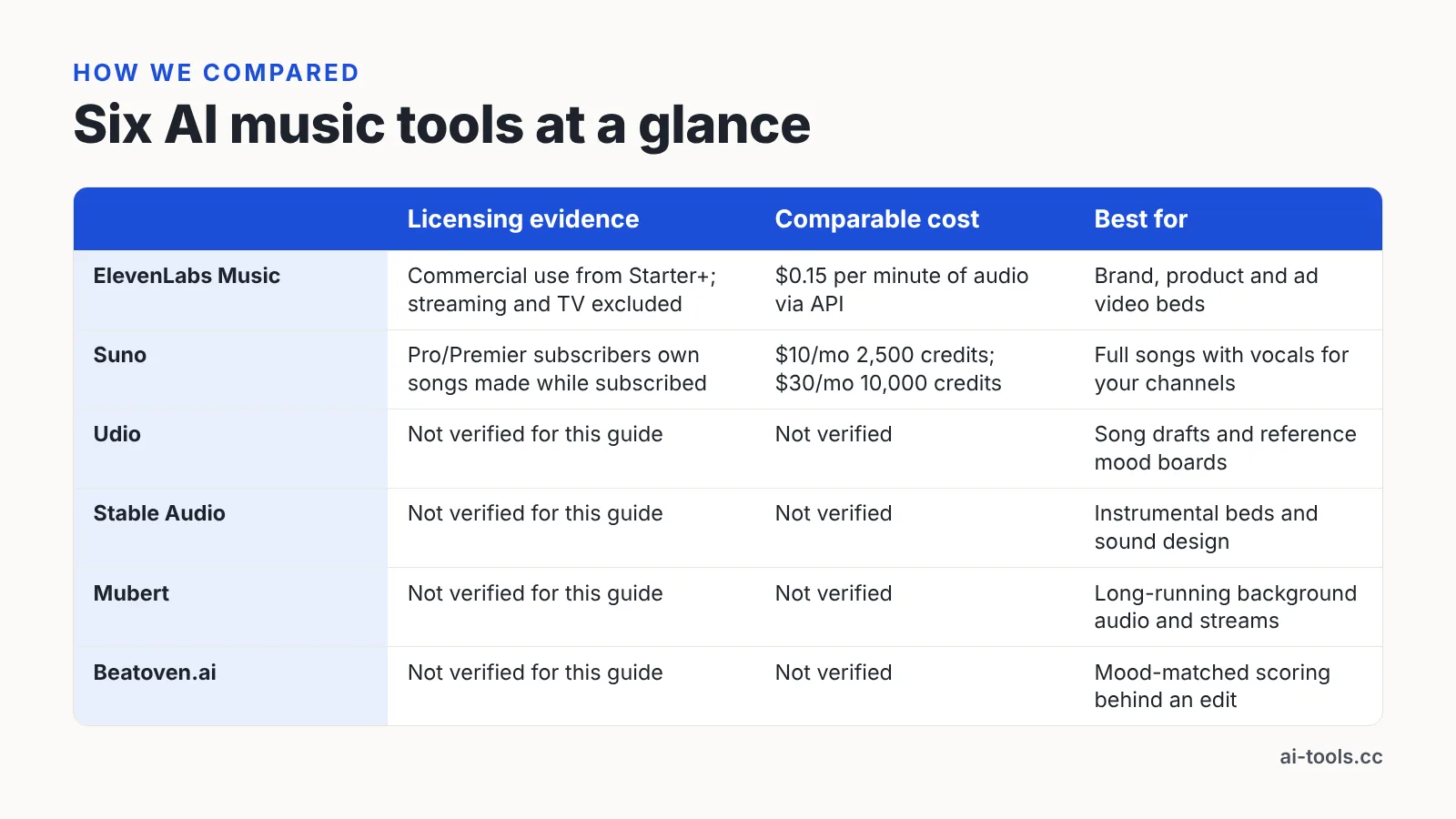
ElevenLabs Music and Suno give the clearest paid-plan commercial rights for video today; Udio, Stable Audio, Mubert and Beatoven.ai can work, but you must verify their current license terms yourself before a client delivery.
How we compared
"Royalty-safe" is two separate questions stacked on top of each other. One is where the training music came from. The other is what your plan actually lets you do with the file after you download it.
This guide weighs six tools on axes that matter when a track ships inside a video:
- Training-data provenance — are there named licensing deals with rightsholders, or silence?
- Commercial rights trigger — does the right attach to the plan, the download date, or the account forever?
- Distribution carve-outs — streaming platforms, TV and radio are often excluded even on paid tiers.
- Cost in a comparable unit — per minute of audio or per credit, not per marketing tier name.
- Output ceiling and format — length cap per generation, sample rate, bitrate.
- Edit control — can you regenerate a section, or only the whole track?
The underlying copyright question also shapes how you should treat the output. The U.S. Copyright Office released the second report in its three-part AI and copyright series on January 29, 2025, according to Privacy World. That report concluded that material generated purely by AI from prompts is not copyrightable under existing U.S. law, according to Sidley Austin.
What this guide did not verify: nobody here ran blind listening tests, no lawyer reviewed any terms of service, and current pricing or license wording was only confirmed from published sources for ElevenLabs and Suno. For the other four tools, treat the cells below as prompts to go read the vendor’s own terms before you spend money.
| Tool | Licensing evidence verified | Output limits verified | Comparable unit cost | Best for | Skip if |
|---|---|---|---|---|---|
| ElevenLabs Music | Commercial use from Starter+; excludes streaming distribution and TV/radio (ElevenLabs). Launch model trained on licensed production music; Merlin and Kobalt deals (Music Ally) | 5 minutes per generation, 44.1kHz, 128–192kbps (ElevenLabs) | $0.15 per minute of audio via API (ElevenLabs) | Brand, product and ad video beds | The track needs to land on Spotify or a TV spot |
| Suno | Free-plan songs cannot be monetised, no retroactive licence; Pro/Premier subscribers own songs made while subscribed (Suno) | Not verified | $10/mo for 2,500 credits (Pro), $30/mo for 10,000 credits (Premier), per UsagePricing | Full songs with vocals for channels you own | You drafted the song on a free account |
| Udio | Not verified for this guide | Not verified | Not verified | Song-style drafts and reference mood boards | A client contract requires documented rights today |
| Stable Audio | Not verified for this guide | Not verified | Not verified | Instrumental beds and sound design | You need lead vocals |
| Mubert | Not verified for this guide | Not verified | Not verified | Long-running background audio and streams | You need one short, tightly cut hero track |
| Beatoven.ai | Not verified for this guide | Not verified | Not verified | Mood-matched scoring behind an edit | You want a radio-ready vocal single |
1. ElevenLabs Music
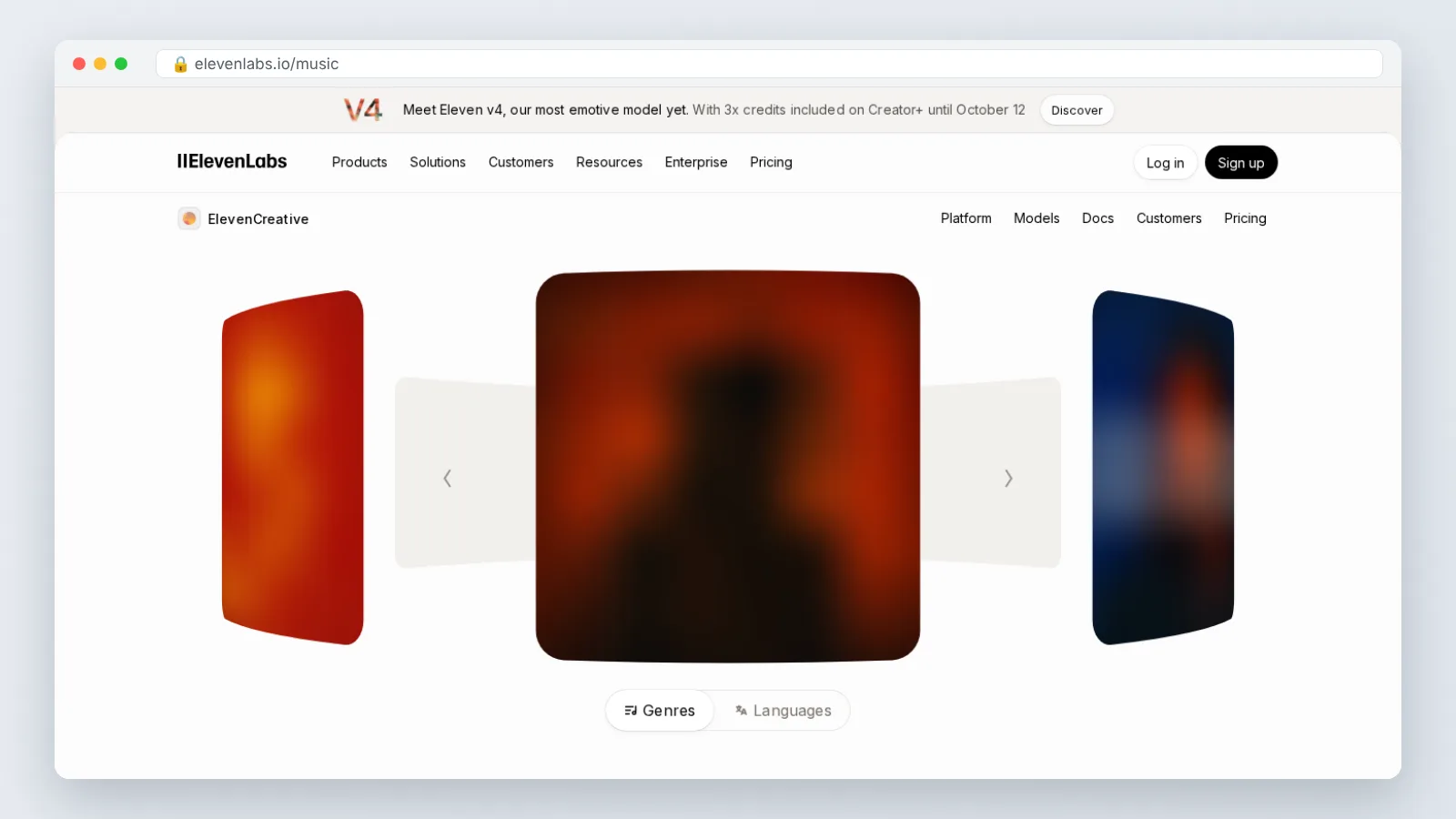
Start here if the deliverable is a video and the client asks who owns the music. ElevenLabs has the most legible paper trail of the six.
ElevenLabs bills Eleven Music generation at $0.15 per minute of audio through its API, according to its API pricing page — ten 90-second beds therefore cost about $2.25 in generation fees. That unit price is easy to put in a project budget, which is rare in this category.
The technical ceiling is published too. Eleven Music API output is capped at 5 minutes per generation and delivered at 44.1kHz, 128–192kbps, with commercial-use licensing starting on Starter+ plans, according to ElevenLabs. For a 30-second pre-roll or a three-minute explainer, that cap never bites.
Read the carve-out before you promise anything. ElevenLabs states that on Starter and higher plans, generated music may be used commercially for many use cases but not for streaming distribution or enterprise-only uses such as TV and radio. A YouTube product film is inside that fence; a Spotify release is not.
Provenance is the other reason this sits at number one. Eleven Music’s launch model was trained on licensed production music, and ElevenLabs signed licensing deals with Merlin and Kobalt, according to Music Ally.
Who it’s for: agencies and in-house video teams who need a defensible answer about training data and a per-minute cost line.
Don’t pick it if: your track is meant for streaming distribution or a broadcast spot — the plan terms exclude exactly that.
2. Suno
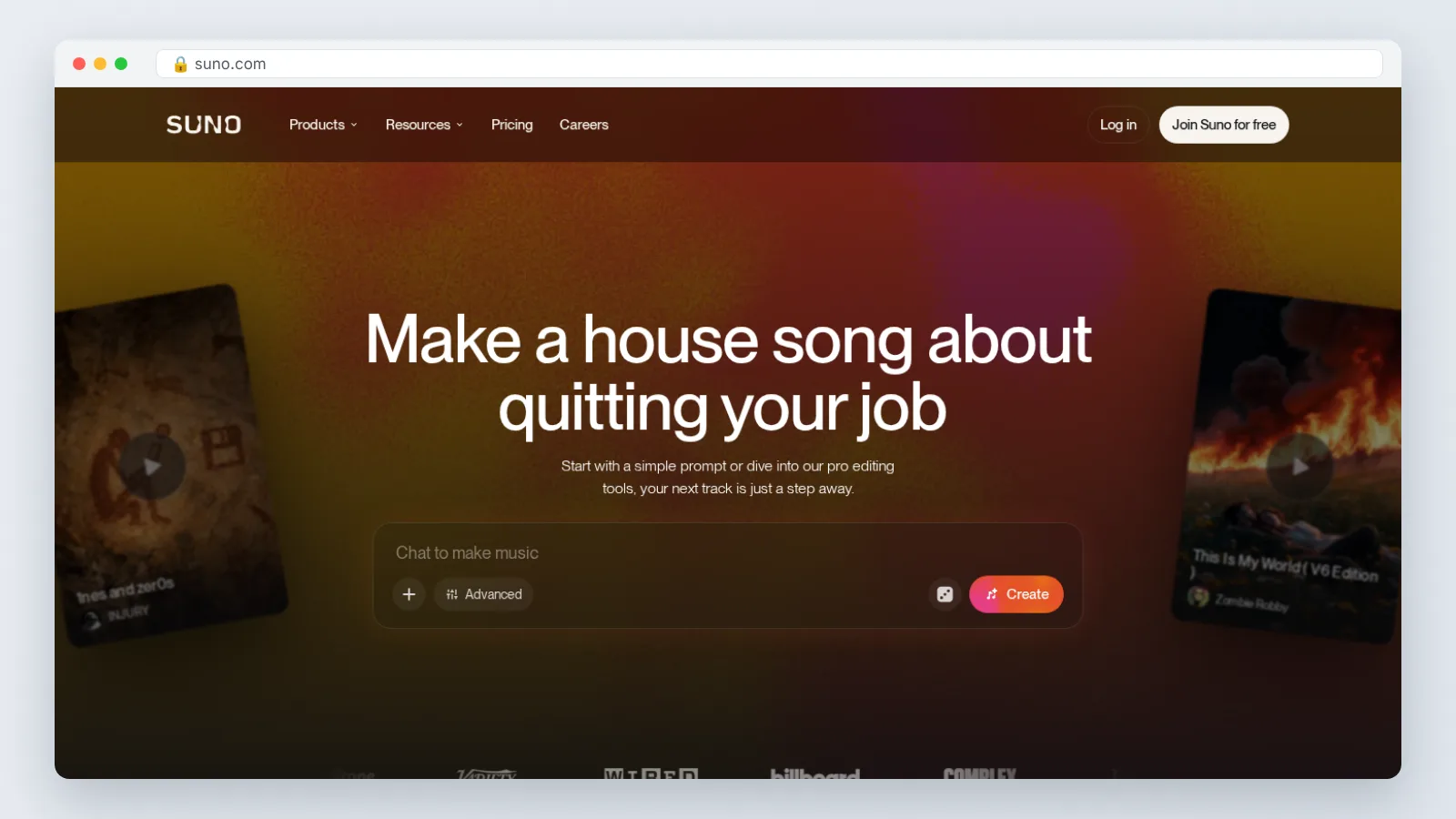
Suno is the one people reach for when the video needs an actual song with a hook and a vocal. The licensing logic is different from ElevenLabs: rights attach to the moment of creation, not to the account.
Suno says users who were subscribed to Pro or Premier when a song was created are the owners of that song and keep commercial-use rights even after cancelling, according to its knowledge base. Suno’s Rights & Ownership documentation ties commercial-use rights to songs downloaded while subscribed. Date-stamp your downloads and keep the invoices.
The trap is the free tier. Suno’s help centre states that songs generated on the free plan cannot be monetised and that subscribing later does not grant a retroactive commercial licence for those songs. Teams routinely prototype free, fall in love with a draft, then discover the draft is unusable commercially.
On cost, Suno’s paid tiers are priced at $10 per month for 2,500 credits on Pro and $30 per month for 10,000 credits on Premier, according to UsagePricing. Divide those out: Premier gives four times the credits for three times the money, so heavy weeks are cheaper per credit on the higher tier.
Who it’s for: creators making vocal tracks for channels and campaigns they control, who will stay subscribed through production.
Don’t pick it if: your existing favourite drafts were all made on a free account.
3. Udio
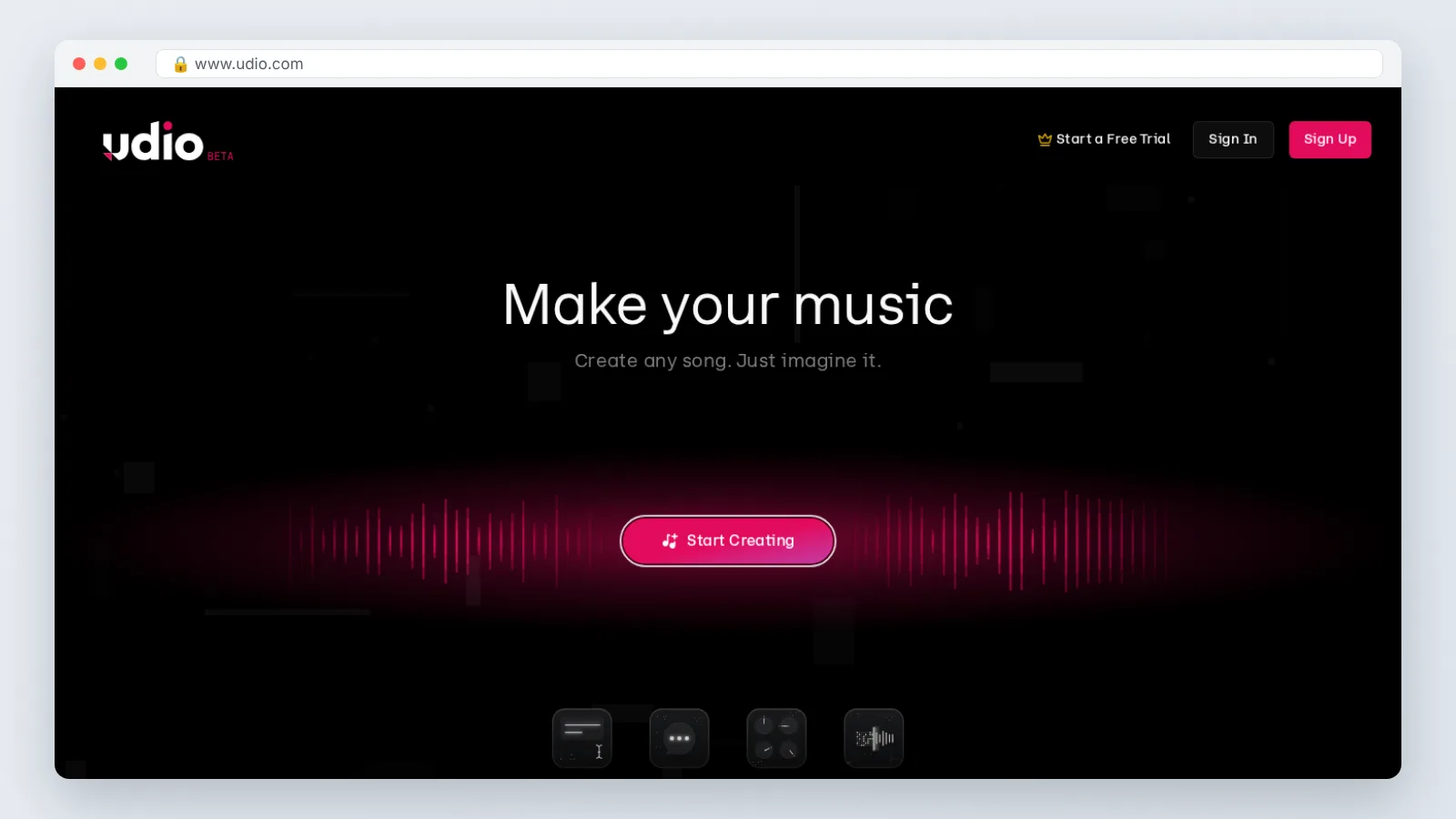
Udio sits in the same bracket as Suno — prompt a style, get a structured song back — and it has a devoted following among people cutting trailers and social edits.
Current commercial terms for Udio were not verified for this guide, so treat anything you read elsewhere as stale until you check the source. That is not a knock on the product; it is a reflection of how fast music-AI license wording has moved since 2025.
Before you put a Udio track under a paying client’s video, get written answers to four questions:
- Does commercial use attach to your plan, to the download, or to the generation date?
- What happens to existing tracks if you cancel?
- Are streaming platforms, paid ads and broadcast excluded?
- Is there any indemnity if a rightsholder complains?
Screenshot the answers and store them with the project files. If a vendor cannot answer question four, price that risk into the job or pick a tool that can.
Who it’s for: teams building mood references and internal drafts fast, where final rights get sorted before launch.
Don’t pick it if: you need documented, contract-ready licensing on the day you deliver.
4. Stable Audio (Stability AI)
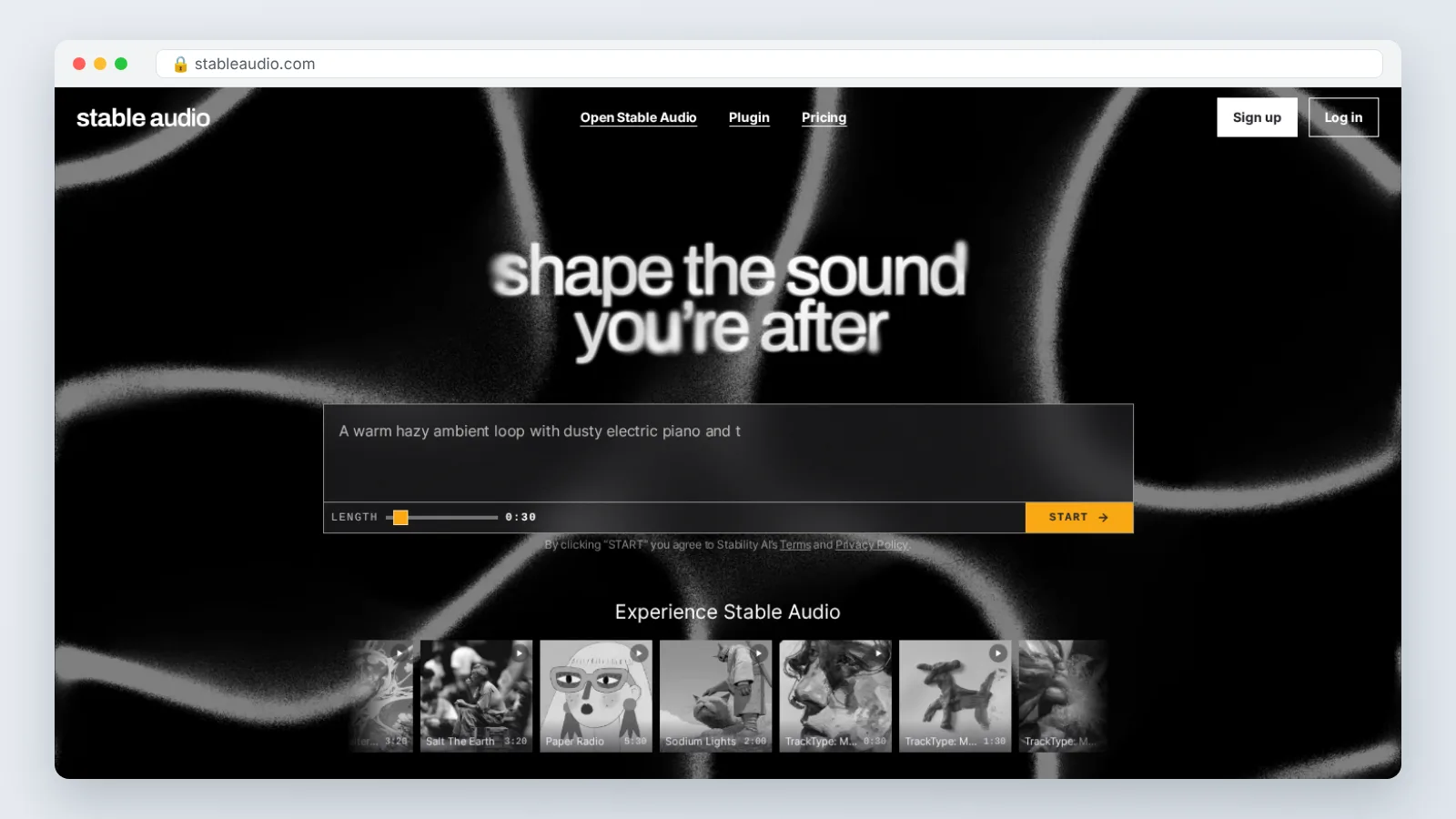
Stability AI’s audio work has always pointed at instrumental material — beds, textures, loops — rather than chart-shaped songs with vocals. For a product demo or a documentary-style edit, that is usually what you want anyway.
Pricing tiers and license wording for Stable Audio were not confirmed from primary sources for this guide. Check Stability AI’s own terms for two specifics: whether the license covers paid advertising, and whether it covers resale as part of a client deliverable. Those two clauses separate hobby tools from production tools.
Instrumental output also sidesteps one practical headache. A synthetic lead vocal that sounds close to a known performer invites questions no video producer wants to field mid-review.
Keep your own paperwork regardless of vendor. Save the prompt, the generation date, the plan you were on, and the exported file in the same folder as the edit project. If a platform ever flags the audio, that folder is your defence.
Who it’s for: editors who need instrumental beds, loops and sound-design textures rather than songs.
Don’t pick it if: the brief calls for a sung chorus with lyrics.
5. Mubert
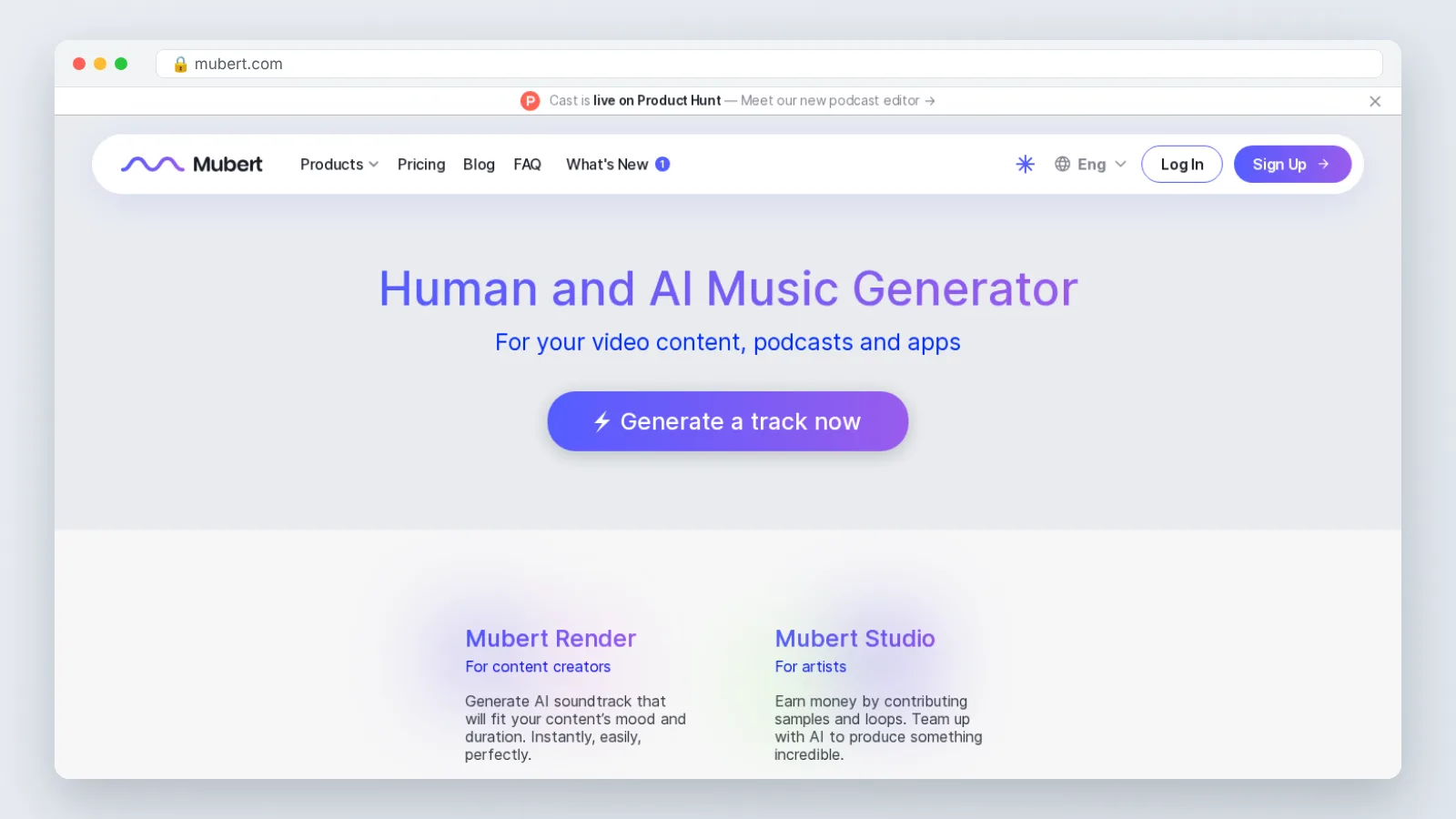
Mubert’s pitch has long been continuous generative audio — material that runs under a stream, an app, or a long-form video without an obvious loop point. That is a different job from scoring a 45-second ad.
License tiers and current pricing for Mubert were not verified here. If you are evaluating it, ask specifically how the license handles duration: some content-music licenses price per track, others per channel or per end product, and the difference shows up badly when one video becomes a six-market campaign.
Test it the way you will use it. Generate ten minutes, drop it under a real edit, and listen for repetition on the second pass. Background audio fails differently from hero music — it fails by becoming noticeable.
One more check for anyone shipping into an app or game: confirm whether the license covers audio embedded in software you distribute, not just video you publish. That clause is often separate.
Who it’s for: teams needing long, unobtrusive background audio for streams, apps and lengthy videos.
Don’t pick it if: you need one short, precisely cut track that hits a specific edit point.
6. Beatoven.ai
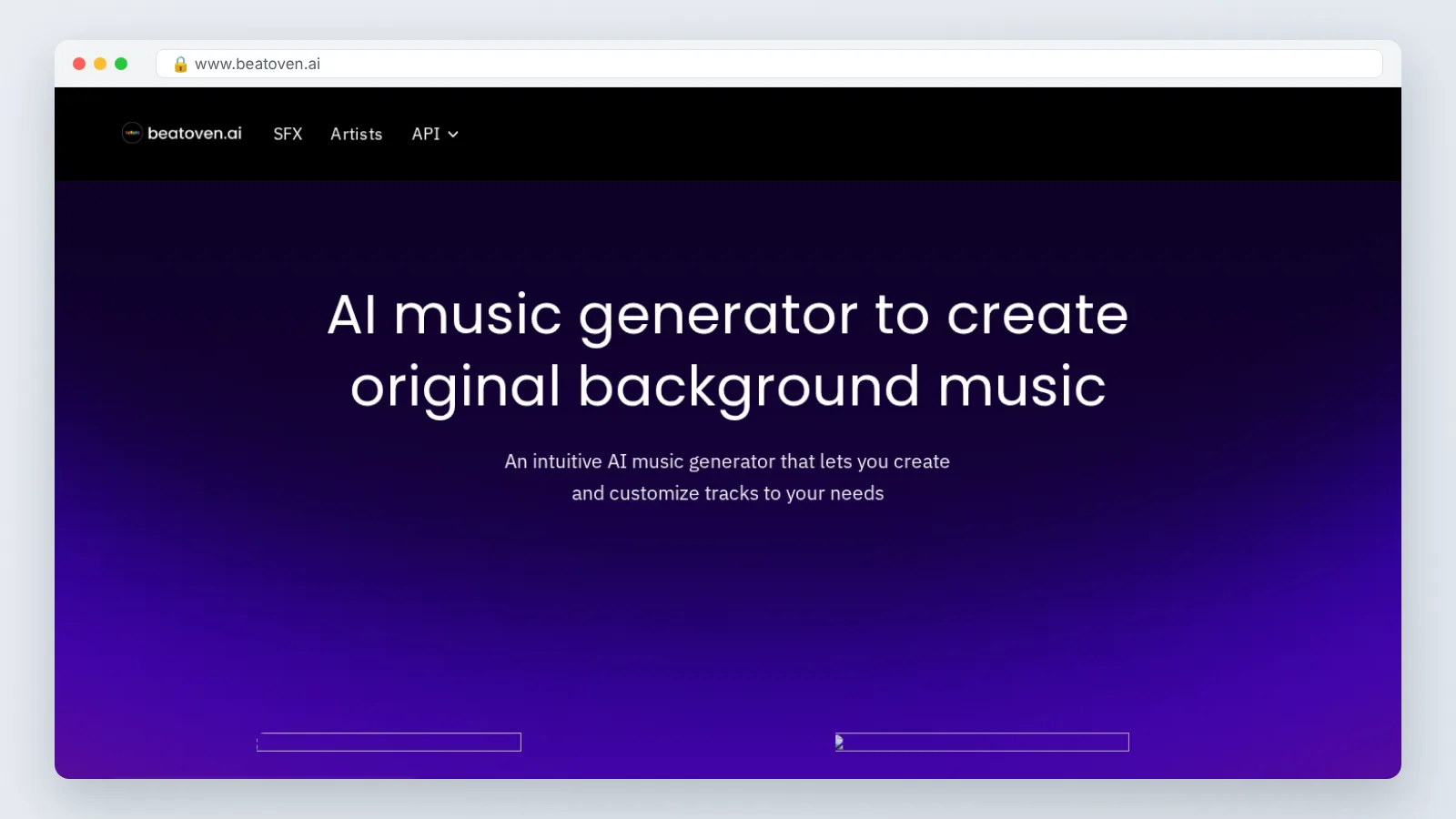
Beatoven.ai aims at video creators directly: describe a mood, get music shaped for a cut rather than for a playlist. For podcast intros and YouTube chapters, that framing saves time.
Its current plans and license wording were not verified for this guide. Before committing, confirm whether the license follows you after cancellation, since that single clause decides whether your back catalogue of published videos stays safe.
Where a video-first tool earns its keep is editing control. Look for the ability to regenerate a single section, shift intensity at a timestamp, and export stems. Without stems, every mix note turns into a full regeneration.
Run a realistic trial before you buy. Take one finished video, replace its existing music, and send it to two colleagues without telling them which track is AI-generated. Their reaction tells you more than any demo reel on the vendor’s homepage.
Who it’s for: solo creators and small content teams scoring regular video output on a schedule.
Don’t pick it if: you are producing music as the product rather than as a layer under picture.
Which one fits you
Match the situation, not the hype cycle. Six common briefs, six answers:
| Your situation | Pick | Why |
|---|---|---|
| Agency video delivered to a client next week | ElevenLabs Music | Commercial use from Starter+ plans and a launch model trained on licensed production music (ElevenLabs, Music Ally) |
| YouTube channel you own, needs a vocal theme | Suno (Pro or Premier) | Subscribers who created the song keep commercial rights after cancelling, per Suno |
| Podcast intro and outro beds | Stable Audio | Instrumental focus avoids synthetic-vocal questions |
| Looping audio under a stream or app | Mubert | Built around continuous generative output |
| Weekly social edits on a schedule | Beatoven.ai | Mood-to-cut workflow with section-level control |
| Track intended for Spotify release | None of the above without checking | ElevenLabs excludes streaming distribution on Starter+; Suno ties rights to the subscribed download |
Two habits protect you more than any tool choice. Keep a per-project record of plan, generation date and download date. Add human arrangement, performance or editing on top of the raw generation — because the U.S. Copyright Office concluded in its January 29, 2025 report that prompt-only AI output is not copyrightable under existing U.S. law, according to Sidley Austin.
That copyright position applies to the United States; other jurisdictions treat machine-generated works differently, and the U.S. rules can change as further guidance and litigation land. This is general information, not legal advice — have counsel review terms before a high-value campaign.
Frequently asked questions
Which AI music tool is safest for a client video in 2026?
ElevenLabs Music has the clearest published position: commercial use starts on Starter+ plans and the launch model was trained on licensed production music, with Merlin and Kobalt deals reported by Music Ally. It still excludes streaming distribution and TV or radio use.
Can I monetise songs I made on Suno’s free plan?
No. Suno’s help centre states that songs generated on the free plan cannot be monetised, and that subscribing later does not grant a retroactive commercial licence for those songs. Regenerate the track while on a paid plan instead of upgrading and reusing the old file.
What does AI music actually cost per minute of video?
ElevenLabs bills Eleven Music generation at $0.15 per minute of audio through its API, according to its pricing page, so ten 90-second beds run about $2.25. Suno sells credits instead: $10 per month for 2,500 credits on Pro and $30 for 10,000 on Premier, per UsagePricing.
Do I own the copyright in an AI-generated track?
In the United States, not from prompting alone. The U.S. Copyright Office released the second report in its three-part AI and copyright series on January 29, 2025, and concluded that material generated purely by AI from prompts is not copyrightable under existing law, according to Privacy World and Sidley Austin. This is general information, not legal advice.
How long can a single AI-generated track be?
Eleven Music API output is capped at 5 minutes per generation and delivered at 44.1kHz, 128–192kbps, according to ElevenLabs. That covers most ads, explainers and social edits; for longer programmes, generate sections and crossfade them in your editor rather than stretching one file.
Sources
- ElevenLabs API Pricing for creators and businesses of all sizes
- Eleven Album: Converging human creativity and technology — ElevenLabs
- ElevenLabs debuts AI music service with Kobalt and Merlin deals — Music Ally
- Can I distribute my songs to Spotify, etc? — Suno Knowledge Base
- Does Suno own the music I make? — Suno Knowledge Base
- Rights & Ownership — Suno Knowledge Base
- Suno Pricing — UsagePricing
- Copyright Office: Copyrighting AI-Generated Works Requires "Sufficient Human Control Over the Expressive Elements" — Privacy World
- U.S. Copyright Office Issues Report on Artificial Intelligence and Copyrightability — Sidley Austin LLP
This article was drafted with AI assistance and published by the AI Tools Editorial Team after its facts were checked against the sources listed above.